

Recently, our president, YAJIMA, and I (Manager SASAKI) had the rare opportunity to exchange views with Mr. SHIGA Toshiyuki, former COO (Chief Operating Officer) of Nissan Motor Co., Ltd.
We would like to take this opportunity to thank you again for taking time out of your busy schedule.
The day’s discussion covered a wide range of topics, including the advent of the SDV era, human resource development, and organizational challenges faced by Japanese companies.
Here I would like to introduce some of the points that impressed me, including my own point of view.
1. In the SDV era, Japan’s “high durability and reliable quality” will become an advantage
The automotive industry is currently at a major turning point in its transition to software-defined vehicles (SDVs).
As vehicles that continuously evolve in functionality after purchase through OTA (Over The Air) become more common, Mr. SHIGA emphasized the importance of hardware durability and reliability.
If software continues to be updated for five or ten years, the underlying hardware must continue to function stably for even longer.
In other words, unwavering hardware quality is essential as a prerequisite for software evolution.
In recent years, cost reduction pressure has increased due to intensifying global competition, and there are more and more situations where it is difficult to spend enough on high quality parts.
However, the component technologies and manufacturing quality that support high durability and reliability are also the great strengths that Japanese manufacturing has cultivated over the years.
If Japan’s accumulated hardware technologies can be combined with AI and other advanced software technologies, the Japanese automobile industry will be fully competitive in the future.
Touching on such suggestions, I was once again strongly impressed by the underlying strength and potential of Japanese manufacturing.
2. Strengthening human resource development will determine competitiveness in the AI and semiconductor fields
In order to make the most of superior hardware, it is essential to have personnel with expertise in the semiconductor and AI technologies that support it.
The challenge is that it is difficult for Japan to build its own competitive advantage if it simply continues to rely on foreign countries in these core areas.
In this regard, Mr. SHIGA cited the recent breakthroughs in Japanese sports, such as soccer and table tennis, as examples.
Behind the increase in the number of athletes achieving world-class results is the development of a system for early identification and continuous nurturing of talent throughout Japan.
In other words, expanding the “base” of human resources will lead to future competitiveness.
Similarly, in the fields of semiconductors and AI, it is important that universities, research institutions, and companies collaborate to develop a system to foster human resources in each region.
In addition, the scholarship system and research support measures must be enhanced to create an environment that makes it easier for talented students to take on the challenges of their specialized fields.
I myself felt that if such a system of training were to spread, it could not only strengthen Japan’s industrial competitiveness, but could also make a significant contribution to regional development.
3. “Decision-Making” Barrier to Restoring Japan’s Competitiveness
In this talk, you also made a striking point about the slow decision-making process of Japanese companies.
Mr. SHIGA stated that “Japanese companies have too many meetings for decision making. This is an issue we often hear from Chinese companies.
In today’s extremely fast-paced environment of change, it is difficult to respond quickly to changes in the market environment with a system that requires many meetings to make a decision and then waiting for a board meeting several months in the future before moving forward.
Even if the technology itself is highly advanced, if it takes time to link it to business and competitive advantage, it may lead to lost opportunities. I feel that the strength of emerging companies lies in their ability to make quick top-down decisions.
In order to take full advantage of Japan’s strength in technology, the organization that receives the technology must also have a higher sense of speed and flexibility.
I was reminded that in the future, not only technological development but also the review of the decision-making mechanism itself will be an important theme for the restoration of competitiveness.
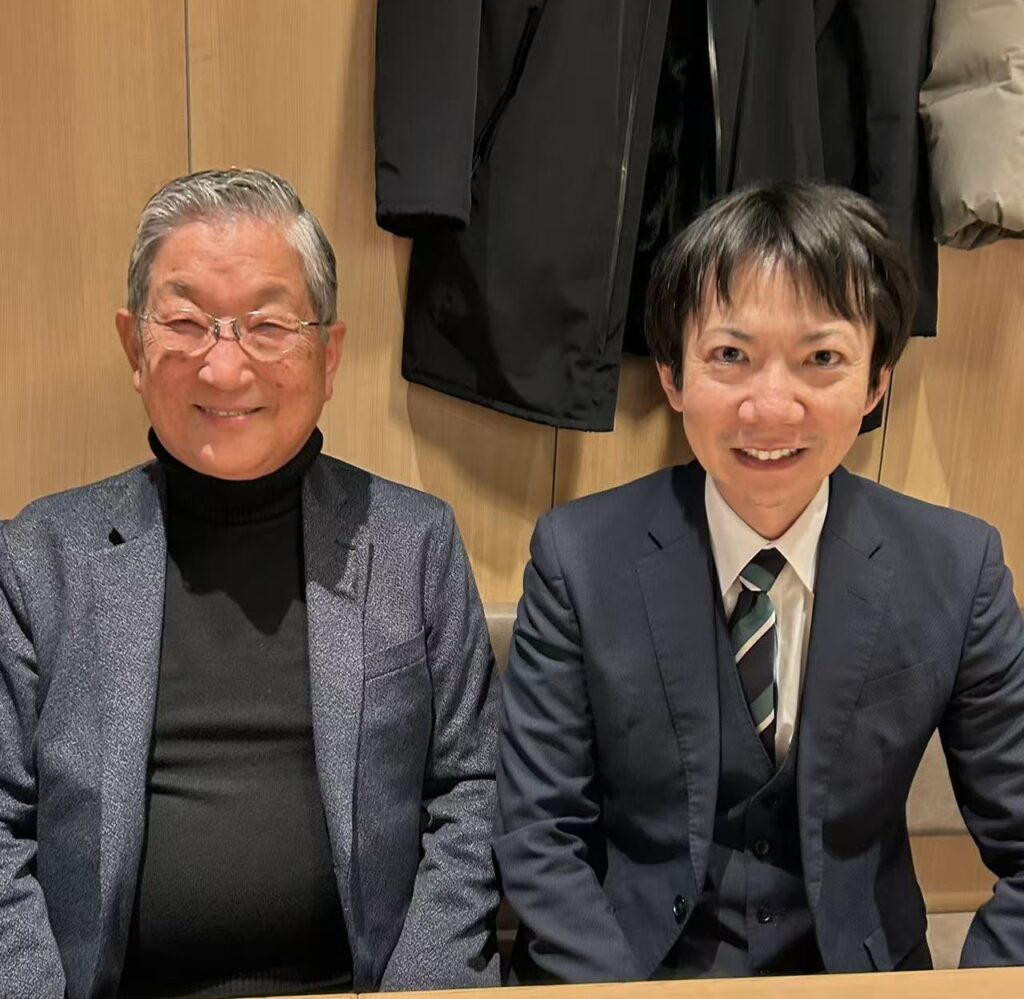
SASAKI (right), Manager, Blue Sky Technology Inc.
Conclusion
Through this exchange of opinions, we reaffirmed the importance of taking a fresh look at Japan’s inherent strengths and linking them to next-generation technologies and rapid decision-making.
Blue Sky Technology is committed to contributing to the further development of the Japanese automotive industry by providing value in the areas of technology, human resources, and business.
Thank you for your continued support of Blue Sky Technology.
We will continue to publish commentary articles on electric vehicles and electrification from an objective perspective that is easy to understand for as many people as possible.
If you have any topics you would like us to cover, or if you have any comments regarding our commentary, we would appreciate your comments on our website or Linkedin.
・Our website: https://blueskyinc.co.jp/
・Linkedin: https://www.linkedin.com/company/blueskyinc/?viewAsMember=true
This article was written by.
SASAKI Yusuke
Manager, Blue Sky Technology Inc.